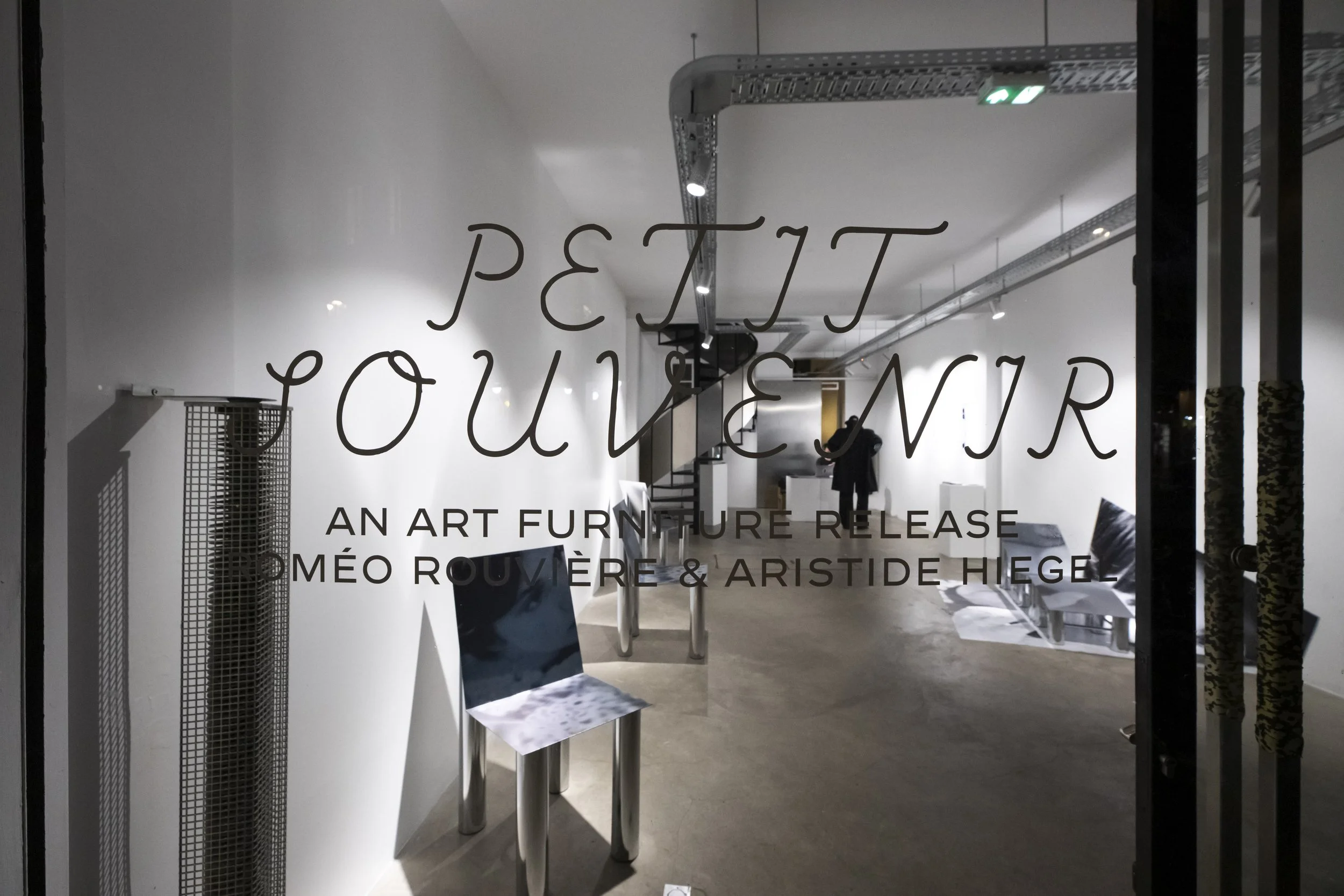
Case study : Petit souvenir project
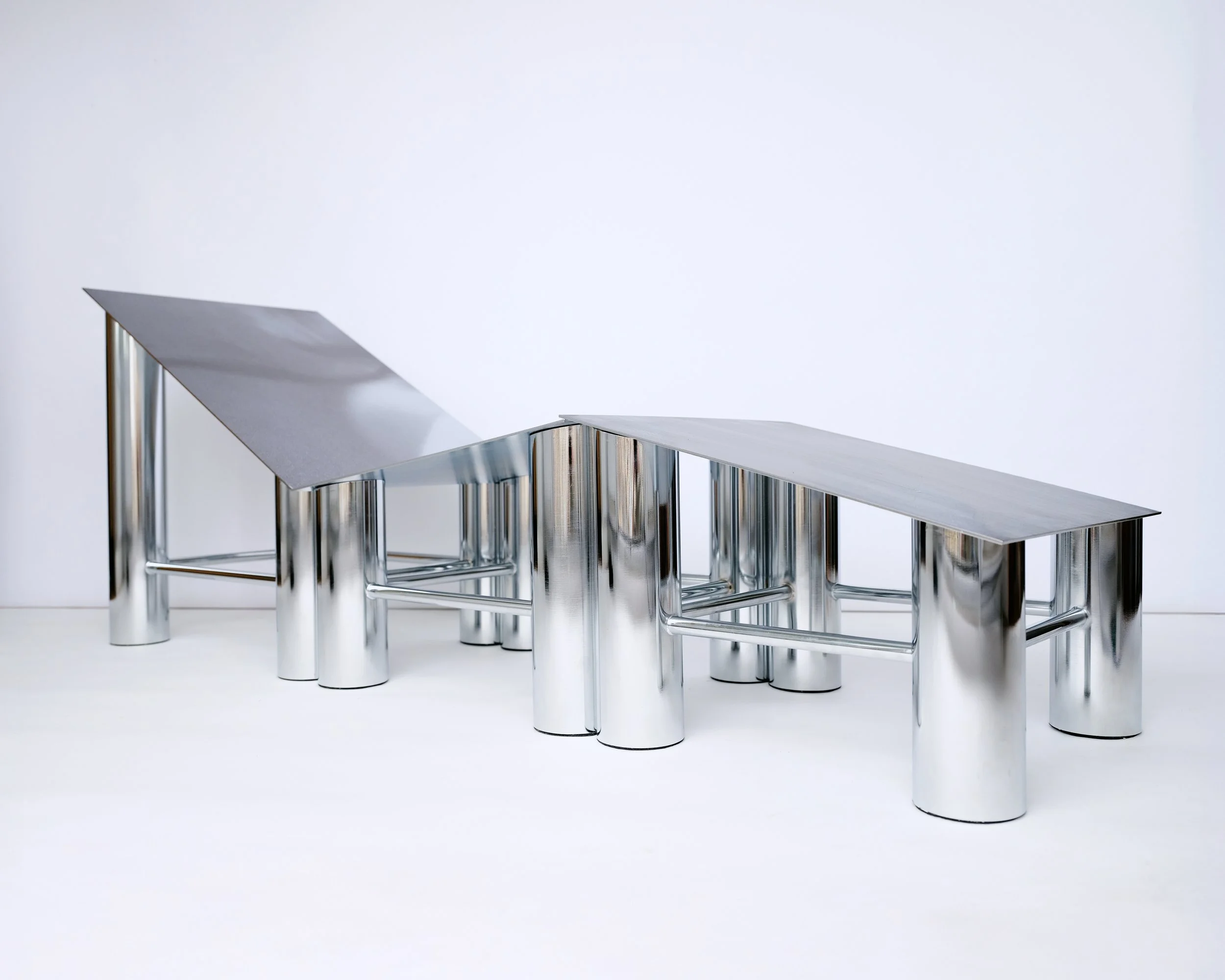
From concept to object: translating a design idea into a technical reality
Some objects appear simple at first glance. A chair, a metal surface, an image.
But behind that apparent simplicity often lies an intense technical process. The transformation of an idea into a precise and manufacturable object.
Petit Souvenir, designed by Roméo Rouvière and Aristide Hiegel, is one of those projects.
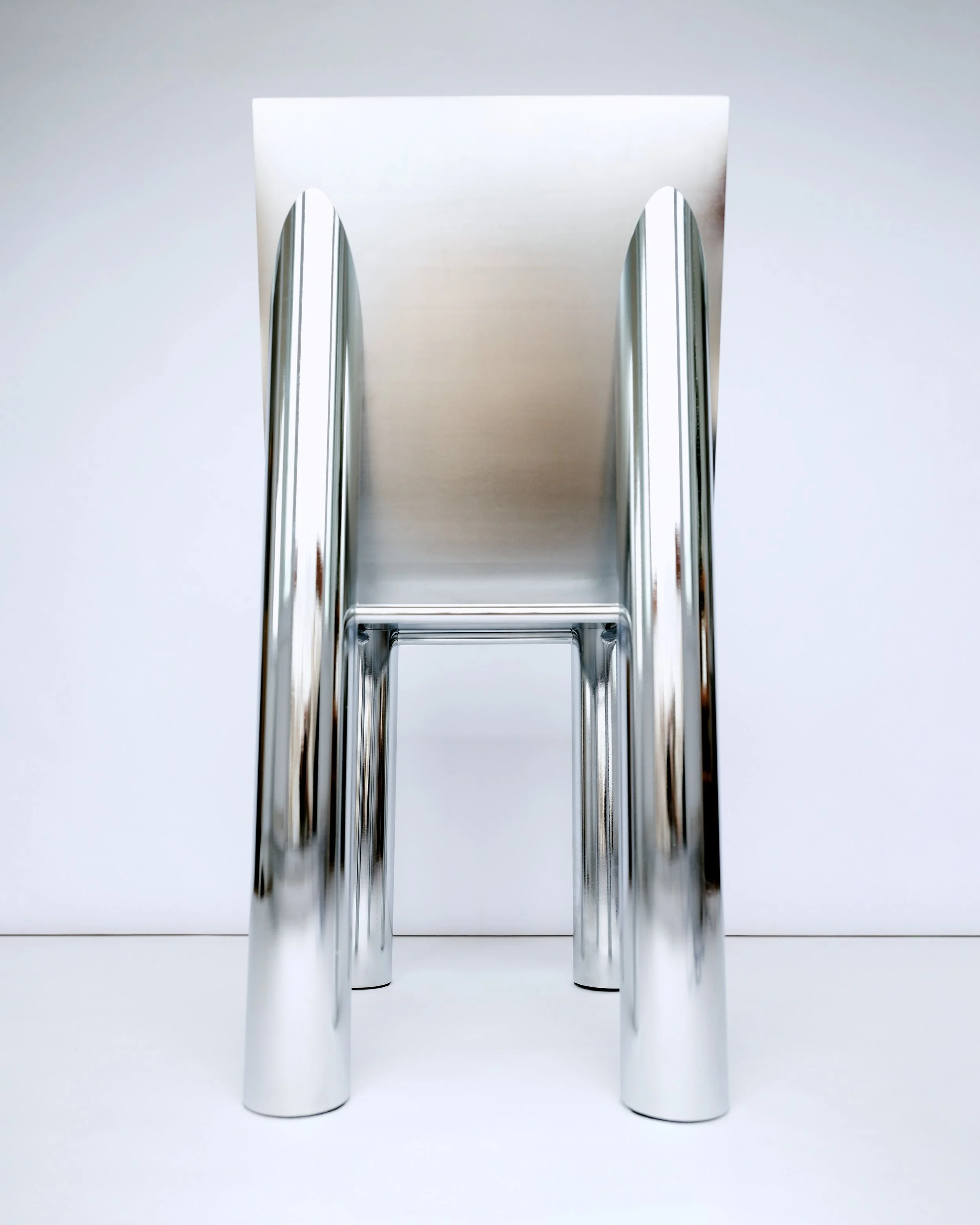
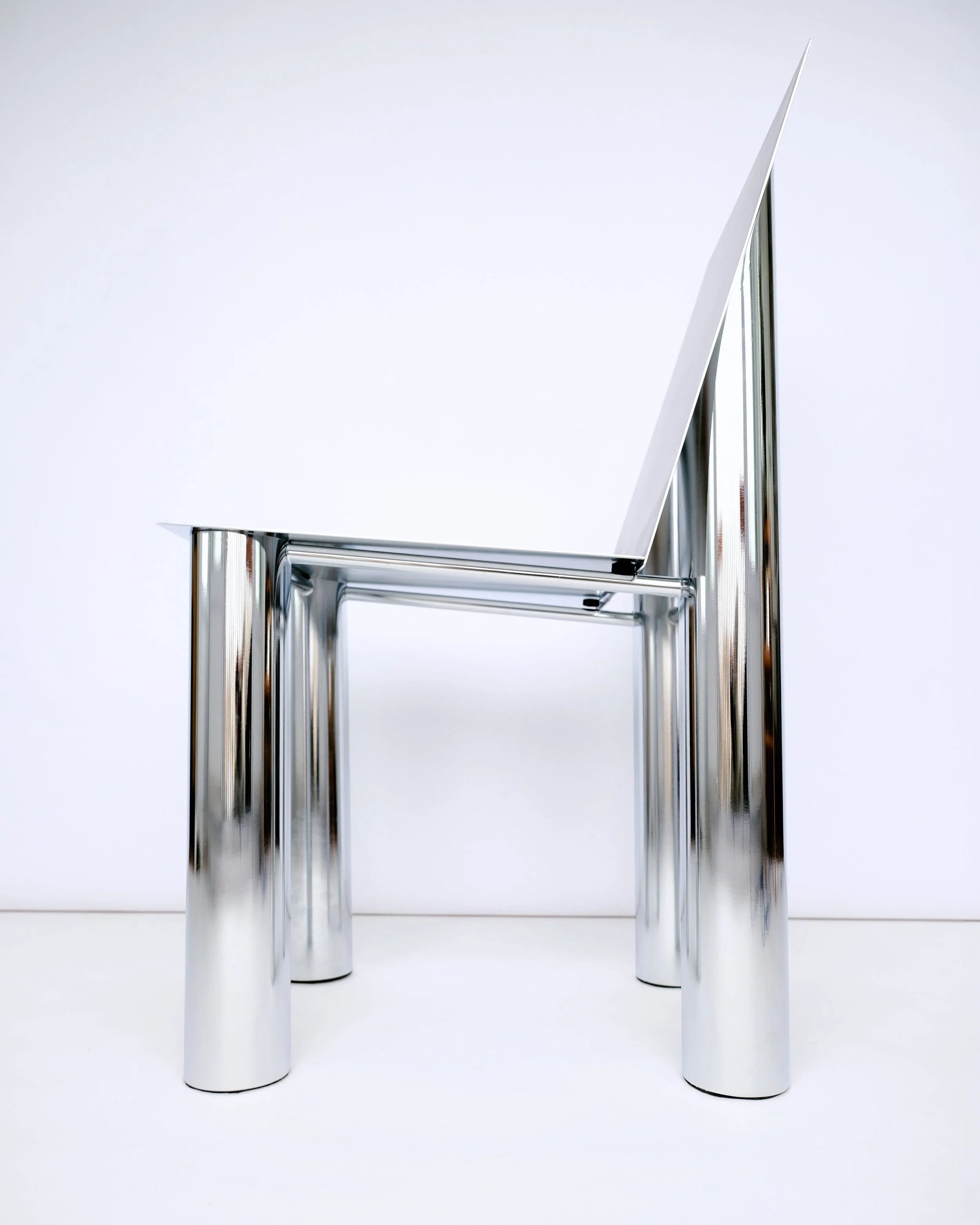
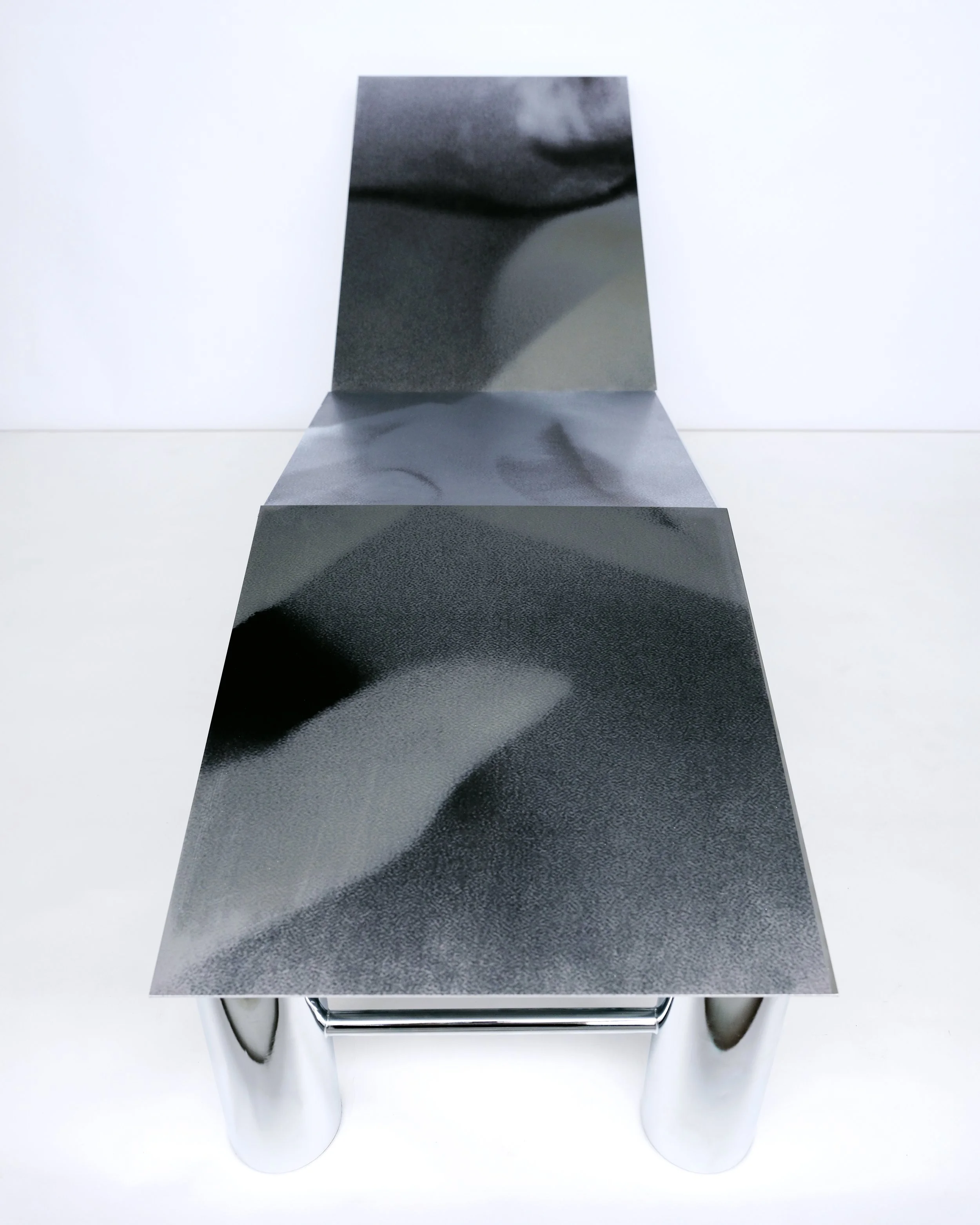
The designers imagined a chair where photography and metal structure merge, where fragments of human stories are printed directly onto reflective chromed steel surfaces.
Turning that idea into a durable object required extensive technical development.
The design came from the studio.
The engineering, product development, and manufacturing were entirely developed by O-FLEX³.
Printing memory onto metal
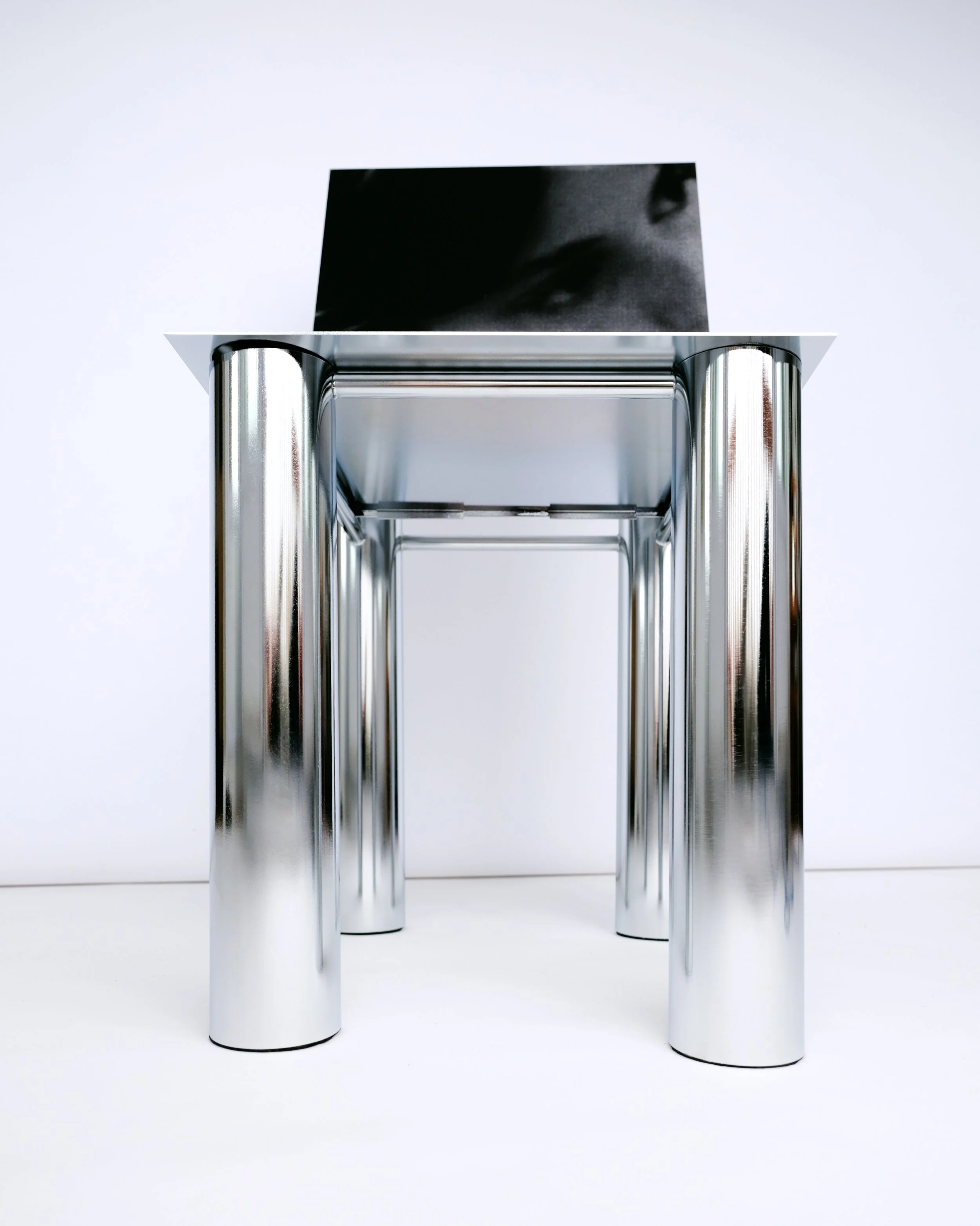
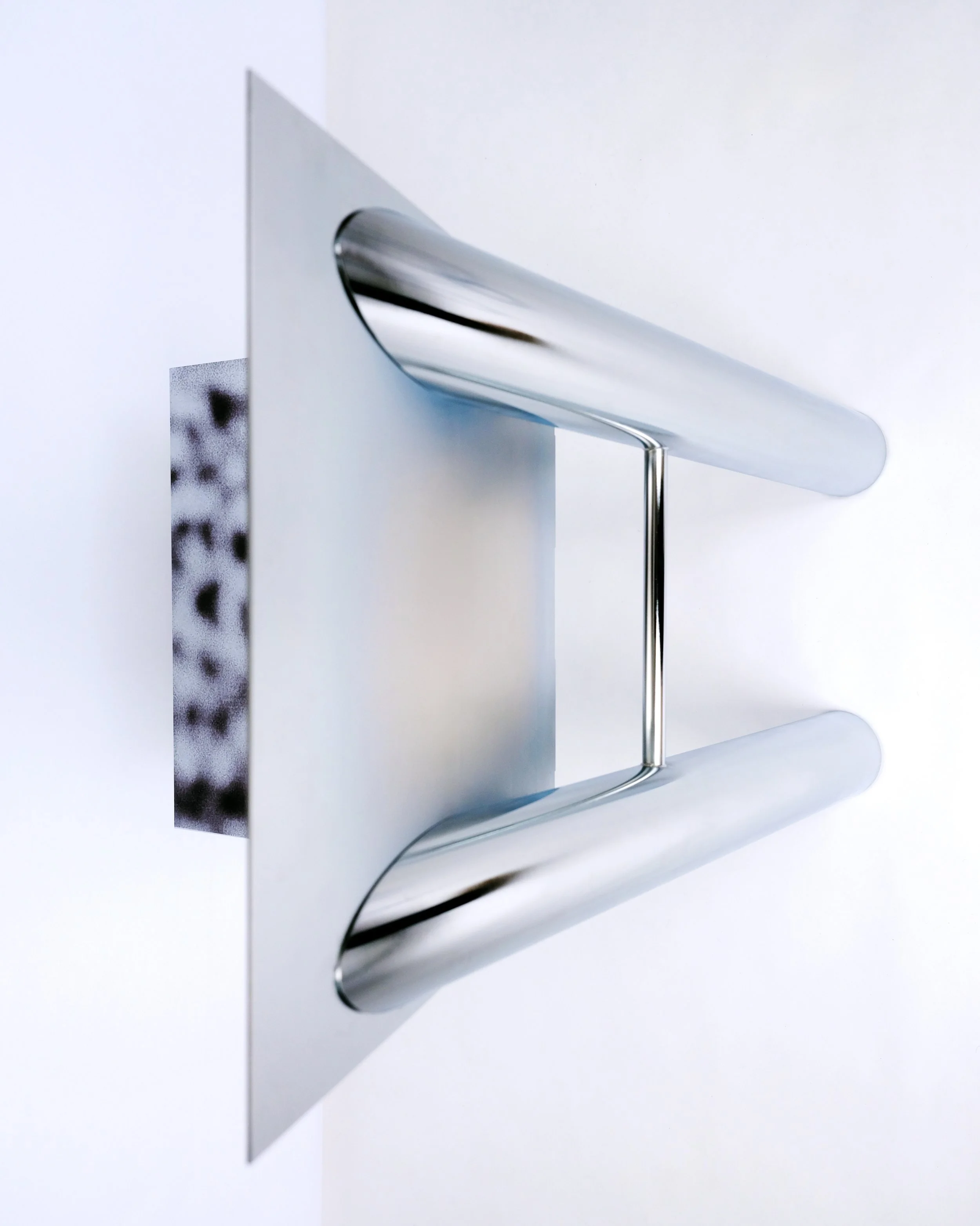
One of the defining features of Petit Souvenir is the UV printing applied directly onto chromed steel sheets.
UV printing is a process where specially formulated inks are deposited onto a surface and then instantly cured using ultraviolet light. The UV energy triggers a chemical reaction in the ink that transforms it from liquid to a solid polymer layer within seconds, creating a durable printed surface.
Unlike traditional printing processes that require drying or heat, UV curing hardens the ink immediately, allowing for high-resolution images with strong resistance to abrasion and fading.
However, printing directly onto metal — and particularly onto highly polished chrome surfaces — presents significant technical challenges.
Metal surfaces have low porosity and limited surface energy, which can make ink adhesion difficult. Without proper surface preparation and controlled curing, the printed layer can peel, crack, or detach from the substrate.
For this project, achieving a stable and precise print required:
careful preparation of the metal surface
testing adhesion between ink and chrome finish
controlling the placement of images relative to edges, joints and stress zones
The result is a surface where photographic fragments appear embedded within the metal, transforming an industrial material into a narrative medium.
The choice of chromed steel
The chair structure is made from chromed steel, a material chosen for both its technical properties and visual qualities.
Chrome plating is a surface treatment where a thin layer of chromium is deposited onto steel through an electrochemical process. This coating significantly improves the hardness, durability and corrosion resistance of the metal.
Chromed surfaces are also known for:
high resistance to scratches and wear
excellent corrosion protection
a smooth, mirror-like finish that reflects light and surrounding space
In the context of Petit Souvenir, this reflective quality becomes part of the object’s narrative: the metal surface not only supports the printed images but also captures reflections of the environment and the viewer, adding another layer to the visual experience.
Invisible joints: laser welding
The structural elements of the chair are assembled using laser welding, a process that allows extremely precise joints with minimal heat distortion.
Compared to traditional welding methods, laser welding produces:
cleaner weld seams
reduced material deformation
extremely discreet joints
This technique allows the structure to remain visually continuous, reinforcing the minimal aesthetic of the piece while maintaining structural strength.
For design objects where the finish is exposed and reflective, this level of precision is essential.
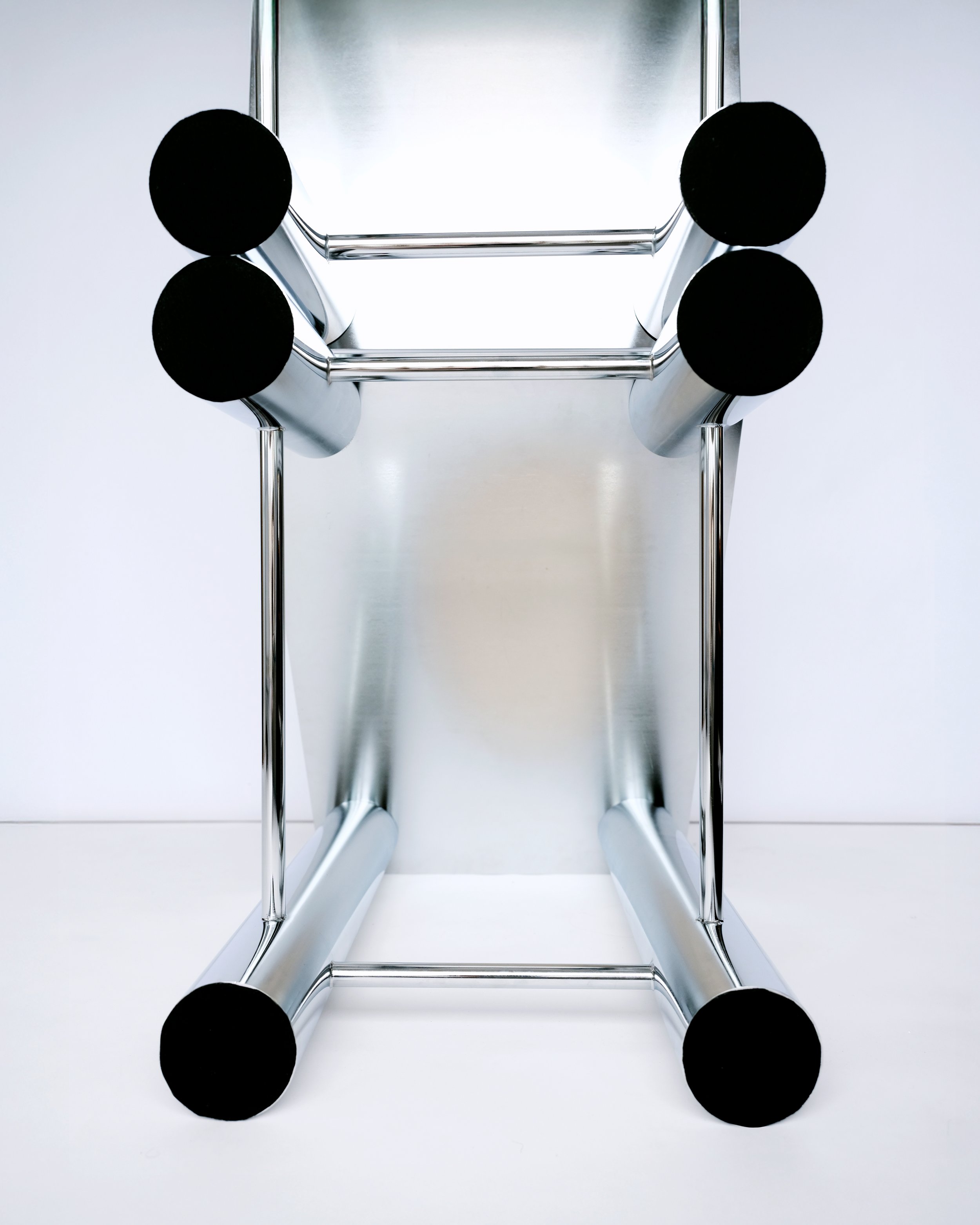
A magnetic assembly system
Another key technical feature of the project lies in the assembly of the seat panels and the legs.
Rather than using visible fasteners, the connection is achieved through a magnetic attachment system developed internally by O-FLEX³.
This solution allows:
a clean, uninterrupted surface
simplified assembly
reversible connections between components
Developing this system required internal engineering work to ensure both structural stability and precise positioning of the parts.
From idea to object
Projects like Petit Souvenir illustrate the role of O-FLEX³ in the design ecosystem.
The design studio defines the concept and the object’s intention.
Our role is to transform that vision into a reliable, manufacturable and durable product.
That transformation involves:
technical engineering
material research
prototyping
manufacturing development
production
In this case, the work included combining UV printing, chromed steel structures, laser welding, and magnetic assembly systems into a coherent object.
What appears as a simple chair is, in reality, the result of multiple layers of technical decisions and experimentation.
Two pieces of furniture.
Raw metal.
Fragments of human stories.
Produced by O-FLEX³.