We break your chair before your client does
A beautiful product that fails its first test costs you months. At O-FLEX³, we simulate the strength of your piece at design stage. You find out where it is weak, and what to change, before anything is built.
The problem: weak spots show up too late
A drawing tells you nothing about strength. A section slightly too thin, a machined area slightly too deep, a weld in the wrong place: none of it shows on a 3D render.
The defect appears later. On the prototype that bends. On the certification test that fails. Sometimes on site, when the production run is already done. By then, fixing it is expensive: new tooling, new material, new lead time.
What we do: load the product before it exists
We take your 3D file and apply the loads defined by the furniture standards, using finite element analysis.
The loads are not invented. They come from the reference standards:
StandardUseSeat loadBackrest loadEN 16139Non domestic (hotel, restaurant, office)1600 N, or 160 kg560 N, or 56 kgEN 12520Domestic1300 N, or 130 kg450 N, or 45 kg
Both refer to EN 1728, which defines the test methods. We simulate the most demanding case.
The calculation gives you two clear answers:
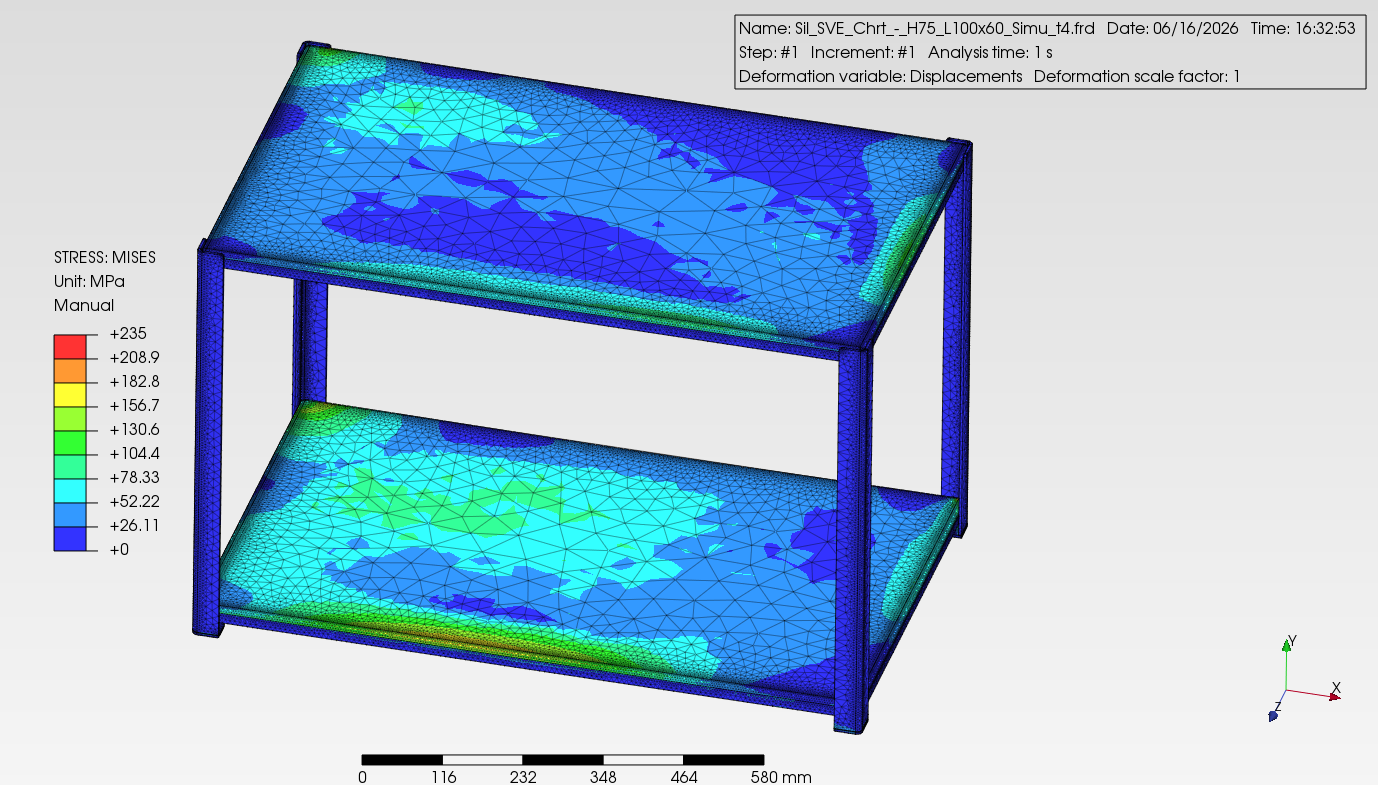
Stress. Where the material works hardest, and whether it stays below its yield limit.
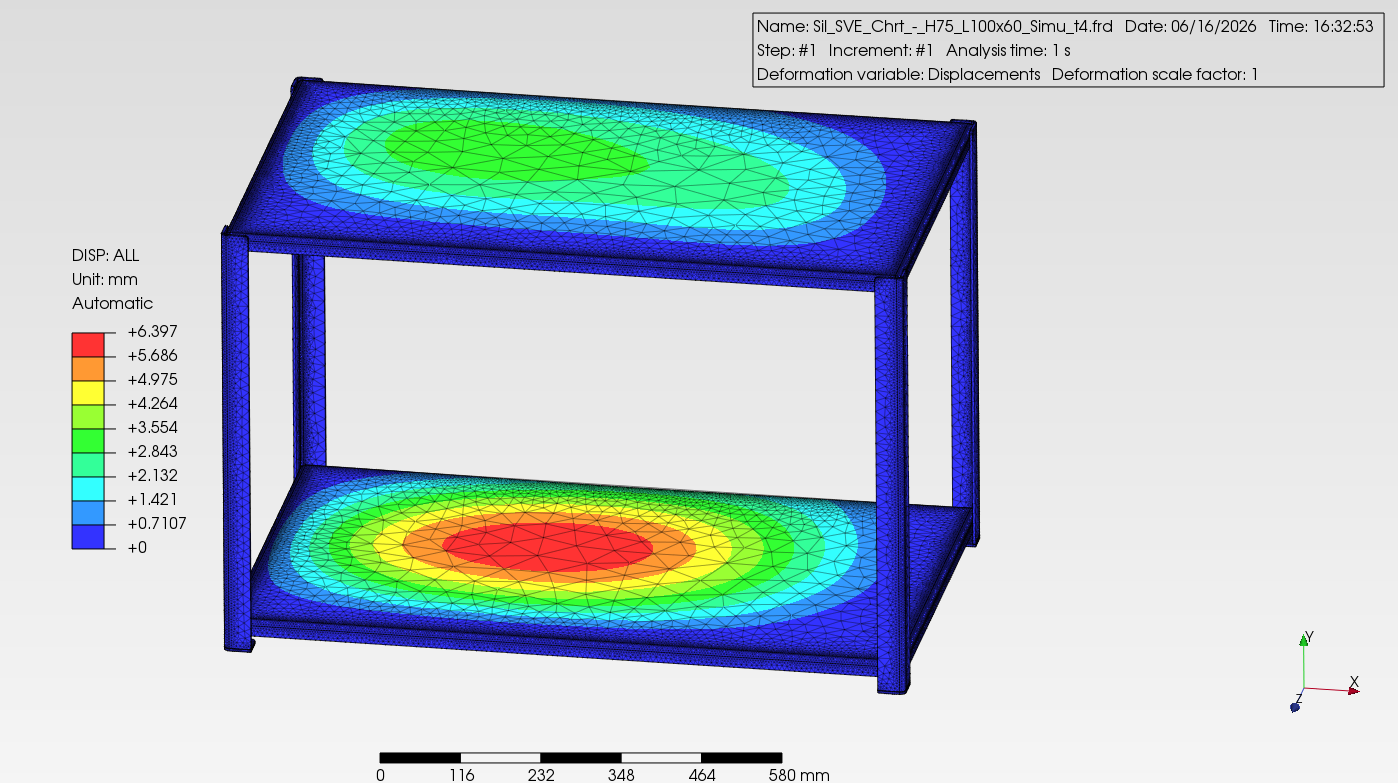
Displacement. How many millimetres the piece actually moves under load.
A recent case
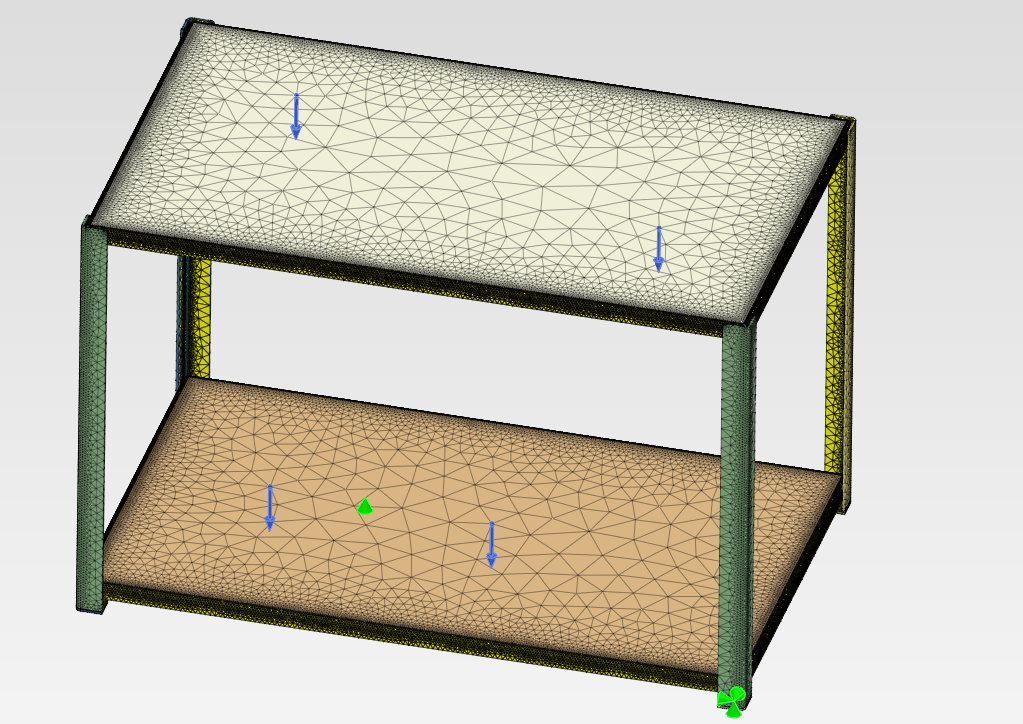
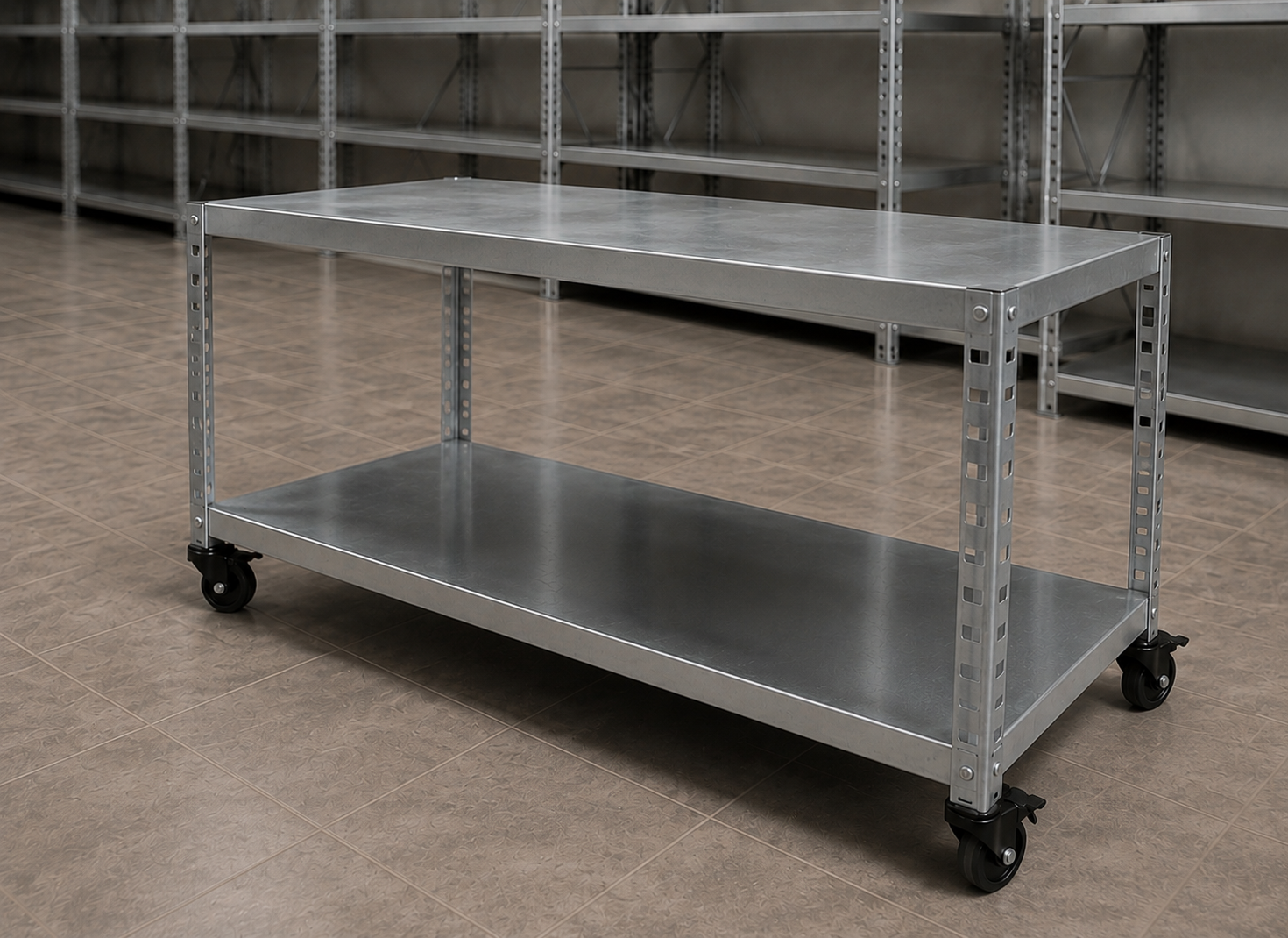
We’ve recently worked on a steel cart. It is a basic product but due to its functionality needs we found out that each shelf could hold up to 400kg statically. Meaning that this weight does not consider the effect of dropping weight onto the cart. This is something that could also be calculated. However, each wheel is able to withstand 150kg. Meaning that the 4 wheels can hold up to 600kg. So the cart can effectively be loaded with 600kg before it could show signs of weakness.
What we usually find
It is almost never the large tubes. It is the details:
machined parts, where the diameter narrows
junctions and tube ends
pockets hollowed out to house a component
thin cross members carrying more load than expected
When one of these shows up, you have two options: a stronger material, or a local change of geometry. The fix happens on the 3D file. Not on a finished production run.
What you get
A full calculation note, in French, English or Portuguese, containing:
the assumptions used (materials, connections, supports)
colour views of stress and displacement
close ups of the weak areas
concrete recommendations for modification
It is a readable document. You can pass it on to your end client or to your engineering office.
The real benefit: walking into the lab with confidence
Simulation does not replace physical testing. Only an accredited lab can certify a product.
What it does is tell you in advance whether your product stands a chance, and which level of requirement you can aim for. Domestic or contract. Hospitality or public use. You know which certifications to target, and you fix the blocking points before paying for the test.
Put simply: you do not pay for a test to discover a problem. You pay for a test to validate a product that already works.
When to send us your project
The right moment is just after the design is validated and before the prototype is launched. A 3D file is enough to start.
The earlier the simulation happens, the cheaper the fix.
Let's talk about your project. Contact your O-FLEX³ representative.